 PERCEPTLE
Perceptle Tempo practice
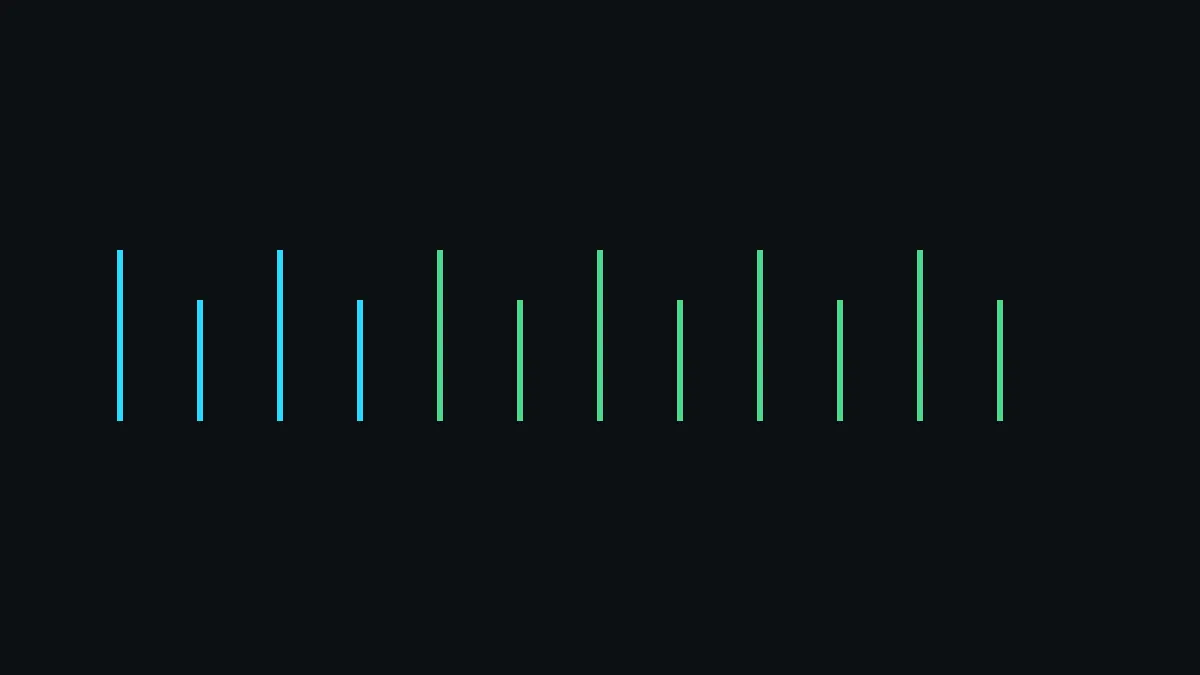
Tempo is the test I trust least on a first play. The client plays four beats, somewhere between 75 and 130 BPM, then you tap eight more. The error is not a single late tap. The public script mixes 0.6 times the absolute average offset with 0.4 times the spread of your taps. A steady 40 ms late can beat a mix of early and late taps with the same average.
On puzzle #97 the reconstructed tempo is 83 BPM, about 722.9 ms per beat, and the continuation is on the beat. Puzzle #98, a Friday, is 80 BPM with the eight taps on the half-beat. I could hear the four setup clicks on #97 and still rushed the silent eight. The stats snapshot agrees: Tempo averaged 32.6 that day, against a total average of 65.3.
Trainer
This clock is the browser’s audio clock, not perceptle.com. A practice score is not an official score. Headphones with a noticeable delay will look worse here and there.
What the points mean
Normal σ is 60 ms. Friday σ is 85 ms. An error of 15 ms is about 97 points, 30 ms is about 88, and 60 ms is about 61. The client also uses the four listen beats as the reference, so “the BPM I think I heard” is not a separate answer you can type. You only submit taps.
- Click the canvas or press Space. Both are accepted in the official game.
- The tone is a short synthesized click around 1,000 Hz, not a music file.
- Friday: after the four on-beat clicks, put the next taps halfway to the following beat.
- If the room is noisy, the miss is usually a rushed tempo, not a quiet one.
Why did a steady tempo still score poorly?
Being consistently late is only the 0.6 term. If the eight taps also wobble, the 0.4 spread term adds more error. Both have to be small.
Can I practice without sound?
You can see the flash, but the official test is auditory. A silent run will not resemble the daily puzzle.